
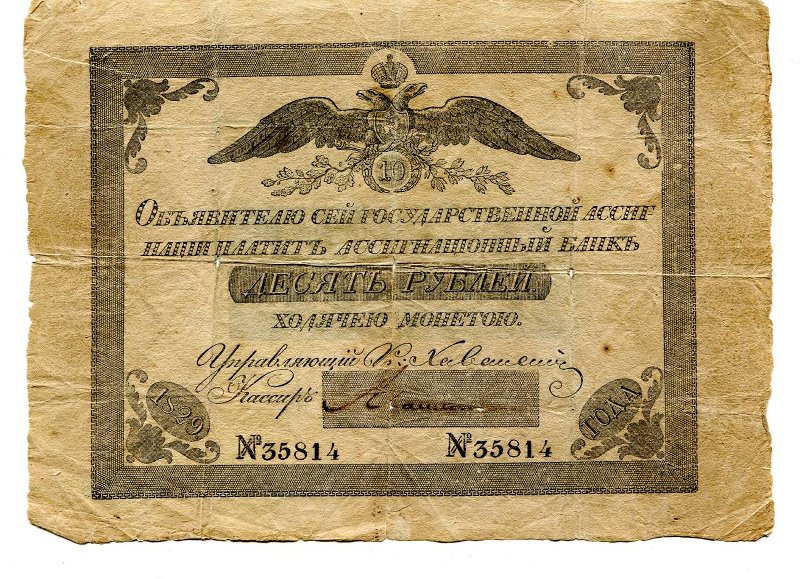
Russian Empire 10 Ruble Assignat, 1829 (1819-1843 Period)
The assignat features a classic design for Russian paper money of the early 19th century. The central motif is the Imperial double-headed eagle, crowned and holding a scepter and orb, with a shield on its chest displaying the denomination '10'. The eagle is surrounded by a laurel wreath. The main text states the obligation of the Assignat Bank to pay 'ДЕСЯТЬ РУБЛЕЙ ХОДЯЧЕЮ МОНЕТОЮ' (TEN RUBLES in current coin) to the bearer. The banknote is framed by an ornate border with intricate geometric patterns and decorative corner elements. The overall aesthetic is solemn and official, typical of state-issued currency of the era, using clear serif typography for the main text and elegant cursive for signatures.
Description
This 10 Ruble Assignat from the Russian Empire, dated 1829, represents a significant piece of Russian monetary history. It belongs to the third major issue of assignats (1819-1843), which were standardized during the reigns of Emperors Alexander I and Nicholas I. Assignats were the primary paper currency in Russia from 1769 until their gradual replacement by state credit notes starting in 1843. Initially, they were convertible to copper coin, but their value often fluctuated due to over-issuance and economic pressures, making them a complex and often volatile part of the financial system. This particular note, with its distinctive Imperial eagle and clear denomination, provides insight into the design principles and governmental authority asserted on the currency of the period. Collectors value these assignats for their historical context, design, and the tangible link they provide to Russia's economic past. The presence of the year '1829' on the left side and the explicit 'ГОДА' (year) on the right confirms its specific issue date.