
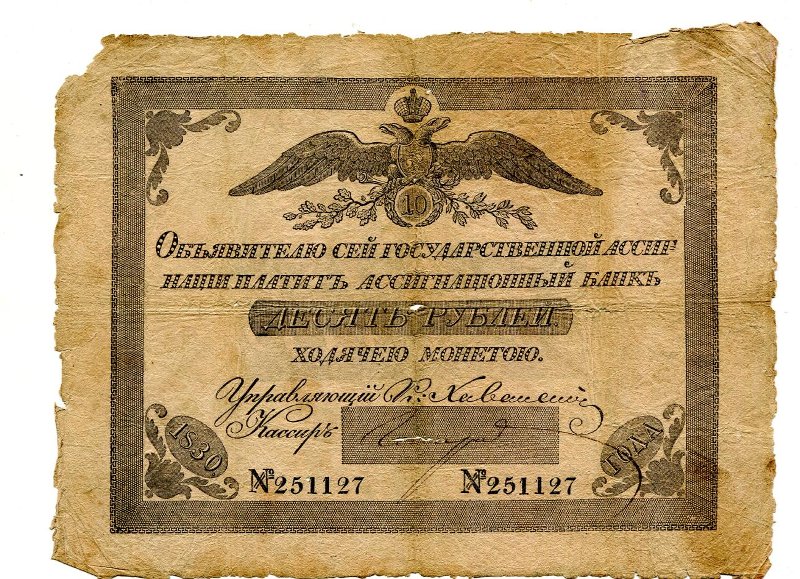
Russian Empire 10 Ruble Assignat, 1830 (1819-1843 Period)
The assignat features a central double-headed eagle of the Russian Empire, crowned, holding a scepter and orb, with the denomination '10' on its chest. The design is framed by an intricate geometric border with ornamental flourishes in the corners. The text is in Cyrillic, executed in a clear, classical serif font for the main proclamation and a distinct calligraphic style for the signatures. The overall aesthetic is characteristic of Russian banknotes from the early 19th century, emphasizing state authority and clarity of information over complex anti-counterfeiting measures.
Description
This is a 10 Ruble Assignat from the Russian Empire, issued in 1830. Assignats were the first paper currency issued in Russia, introduced in 1769. This particular note belongs to the series issued between 1819 and 1843, which saw several design changes and reissues due to economic reforms and a general stabilization attempt after the Napoleonic Wars. The text states: 'ОБЪЯВИТЕЛЮ СЕЙ ГОСУДАРСТВЕННОЙ АССИГНАЦИИ НАШИЙ ПЛАТИТЬ АССИГНАЦIОННЫЙ БАНКЪ ДЕСЯТЬ РУБЛЕЙ ХОДЯЧЕЮ МОНЕТОЮ' (To the bearer of this state assignat our Assignat Bank shall pay TEN RUBLES in circulating coin). The presence of the double-headed eagle signifies its state issue. Assignats of this period were still prone to significant fluctuations in value against silver and copper coin, leading to their eventual withdrawal and replacement by State Credit Notes (Государственные кредитные билеты) in 1843. This piece offers a tangible link to Russia's monetary history during a period of transition and economic challenge.