
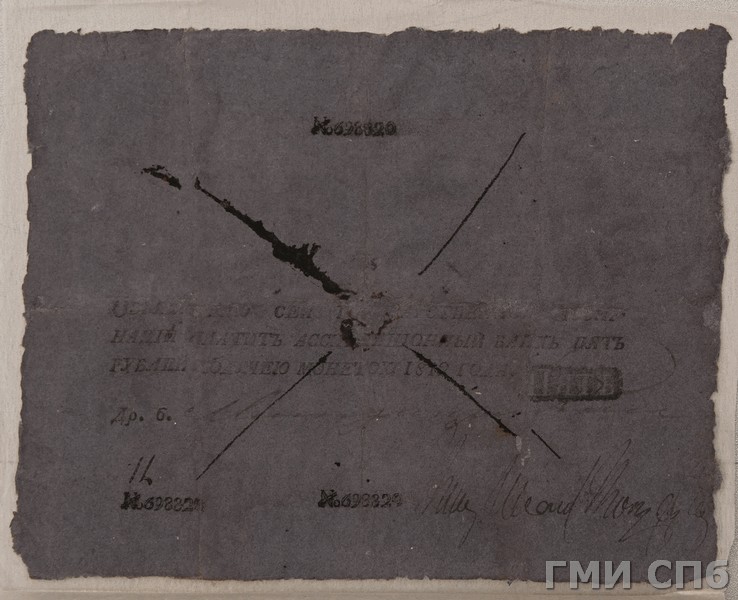
Russian Empire 5 Ruble Assignat, 1819 (1786-1819 Period)
The banknote features an austere and functional design typical of Russian assignats of this period, especially on the reverse side shown. It primarily consists of printed text detailing the note's value and the promise of payment, along with serial numbers and signatures. The specific text visible is 'СЕЙ АССИГНАЦІОННЫЙ БАНКЪ ПЯТЬ РУБЛЕЙ СЕРЕБРЯНОЮ МОНЕТОЮ 1819 ГОДА' (This Assignation Bank [will pay] Five Rubles in Silver Coin of 1819). The background is a dark, possibly grey-blue, color common for these issues, designed for security against counterfeiting. The overall aesthetic is utilitarian, prioritizing clear information and basic security features over elaborate artistry.
Description
This is an Imperial Russian 5 Ruble Assignat from the issue of 1819, belonging to the period of assignat circulation between 1786 and 1819. These notes were introduced during the reign of Catherine the Great to alleviate the shortage of metal currency and finance government expenses, becoming the main paper currency of the Russian Empire for decades. The 1819 issue represented a significant monetary reform aimed at stabilizing the assignat exchange rate, which had depreciated considerably over the years, promising exchange for silver coin. The reverse of the note, as shown, displays the full value declaration and the year of issue, along with unique serial numbers (№ 698820 at the top, and № 698821, № 698822 at the bottom, likely control numbers). Assignats of this era are historically significant as they represent a pivotal phase in Russia's financial history, marking early attempts at paper money management. For collectors, notes from this specific reform period are particularly interesting due to their role in the attempts to restore monetary stability after the Napoleonic Wars. Faint signatures of bank officials provided authorization for these notes.