
Marks and History: A Guide to Soviet and German Porcelain
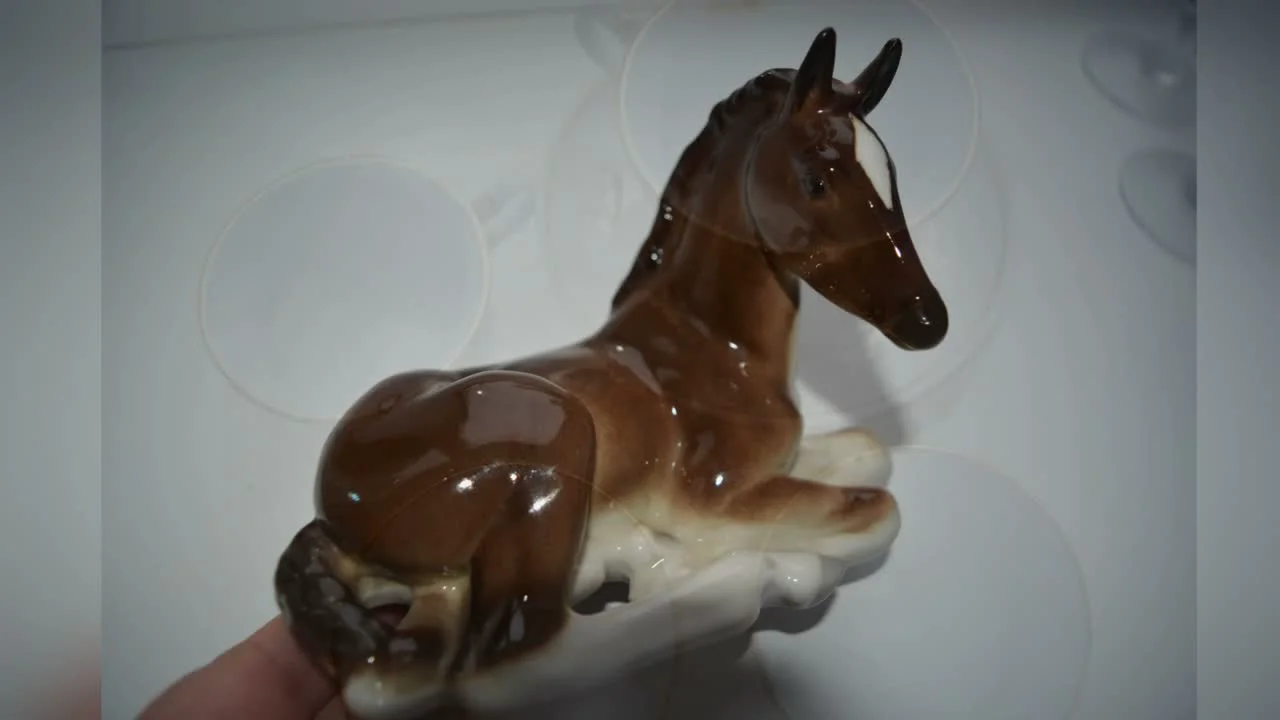
During the Soviet era, it was fashionable to acquire dinner sets, various figurines, and porcelain vases to decorate the sideboard. These items were kept in a prominent place but were used very carefully and rarely, typically only during festive gatherings.
January 31, 2026
Traditions of the Soviet Era
During the Soviet era, it was fashionable to acquire dinner sets, various figurines, and porcelain vases to decorate the sideboard. These items were kept in a prominent place but were used very carefully and rarely, typically only during festive gatherings.
Dmitrovsky Factory 'Verbilki': From the Russian Empire to the Present Day
| Set Composition | Quantity |
| Persons | 6 |
| Total Items | 26 (excluding sugar bowl) |
| Jam Dishes | 6 |
| Cups | 6 |
| Dessert Plates | 6 |
| Teapot | 1 |
| Creamer | 1 |
One of the most famous and oldest manufacturers was the Dmitrovsky Porcelain Factory, also known as 'Verbilki'. It began its work back in the days of the Russian Empire and continues to operate to this day. The factory produced a wide range of products: from dinner sets and figurines to church utensils.
The signature mark of this factory is an elk's head. Often, a large letter 'V' can be seen underneath it, indicating the enterprise's location in the Verbilki settlement of the Moscow Oblast. The Soviet porcelain marks from this factory are common, as it was one of the largest.
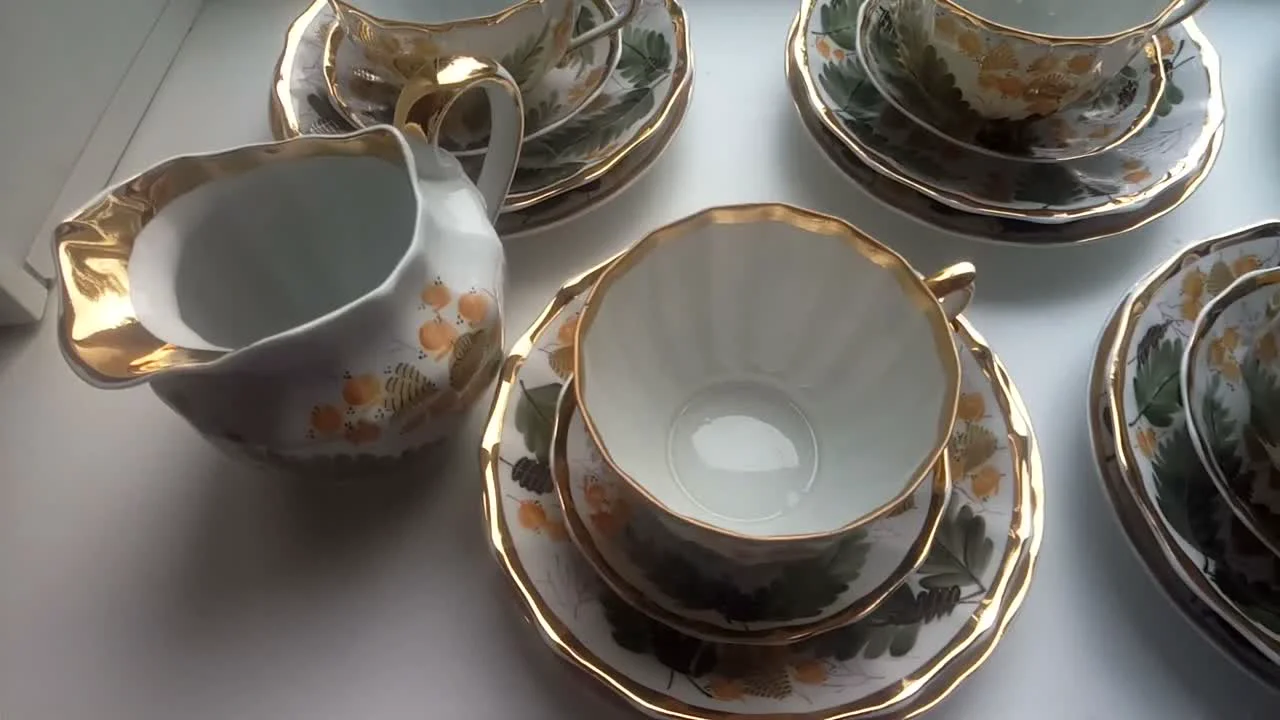
The presented tea set 'Goryun-trava' dates back to the 70s-80s, with the pattern designed by Smirnov. It is made of thin-walled porcelain with hand-painting and luxurious gilding. A special feature of such porcelain is that if you hold a cup up to the light, the mark on the bottom will be visible through it.
Korosten Porcelain: Ukrainian Export
Another significant enterprise was the Korosten Porcelain Factory, located in the city of Korosten, Zhytomyr Oblast, Ukraine. In the 80s-90s, this factory exported half of its production to CIS countries. The range of products was very large and included souvenirs, figurines, and tableware for everyday use.
The factory's mark consists of the letter 'K' on a symbolic shield. The color of the mark helped to determine the product's grade.
- Red color: first grade.
Leningrad Factory (LFZ): From Soviet Classics to 'Imperial'
The most famous and leading enterprise for the production of artistic porcelain in the USSR was the Leningrad Porcelain Factory named after M.V. Lomonosov, or LFZ for short. It was also often called the 'Lomonosov' factory.
Products manufactured at this factory during the Soviet years can be seen not only in Russian homes but also in the world's largest museums, such as the Hermitage. Today, this enterprise has been renamed the 'Imperial Porcelain Factory' (IPF), but the LFZ mark remains a recognizable symbol of the era.
Other Famous Porcelain Factories of the USSR
Among other oldest enterprises, the Konakovo Porcelain and Faience Factory named after M.I. Kalinin (ZiK) in the town of Konakovo, Tver Oblast, stood out. Unfortunately, it has now ceased its operations. Its mark from the 1960s to the 1990s consisted of the letters 'ZiK' and an image of a spruce twig.
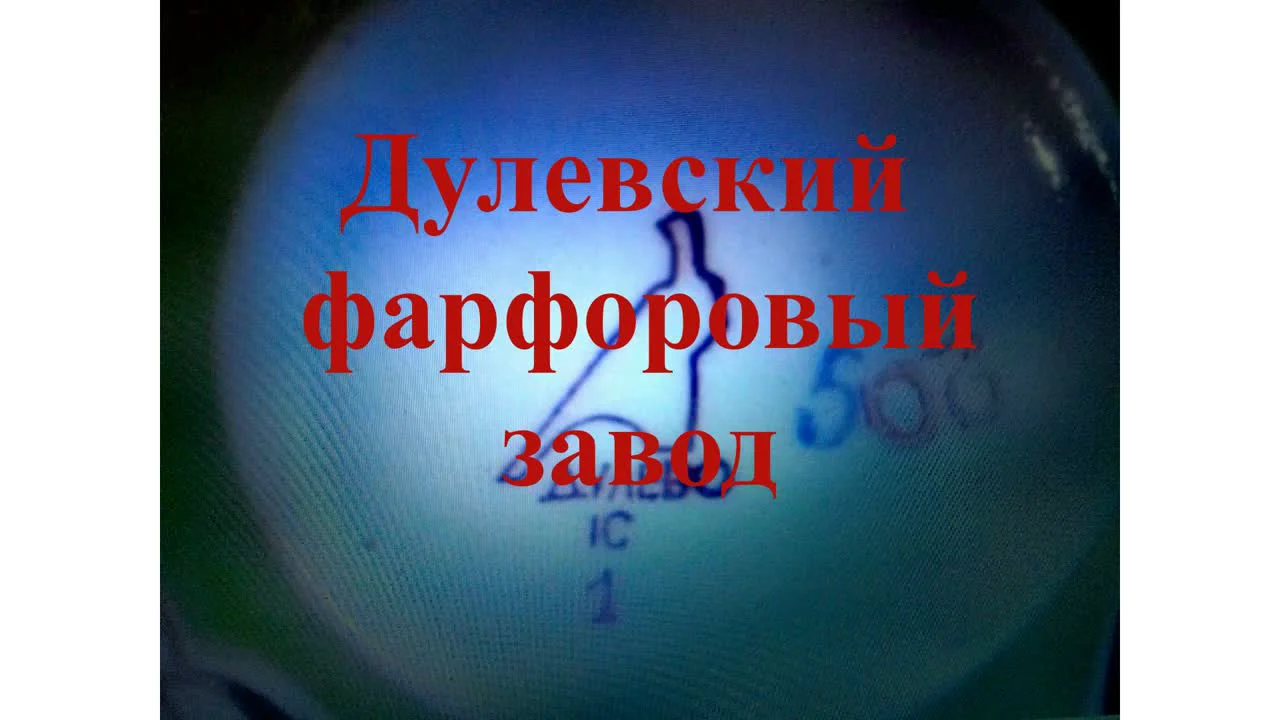
The Dulevo Porcelain Factory was and remains the largest enterprise for tableware production. It is located in the town of Likino-Dulyovo, Moscow Oblast. The factory is still actively developing, participates in exhibitions, and has a shop and a small museum on its premises. The 'Dulevo Porcelain' mark is a stylized image of a bird looking to the right.
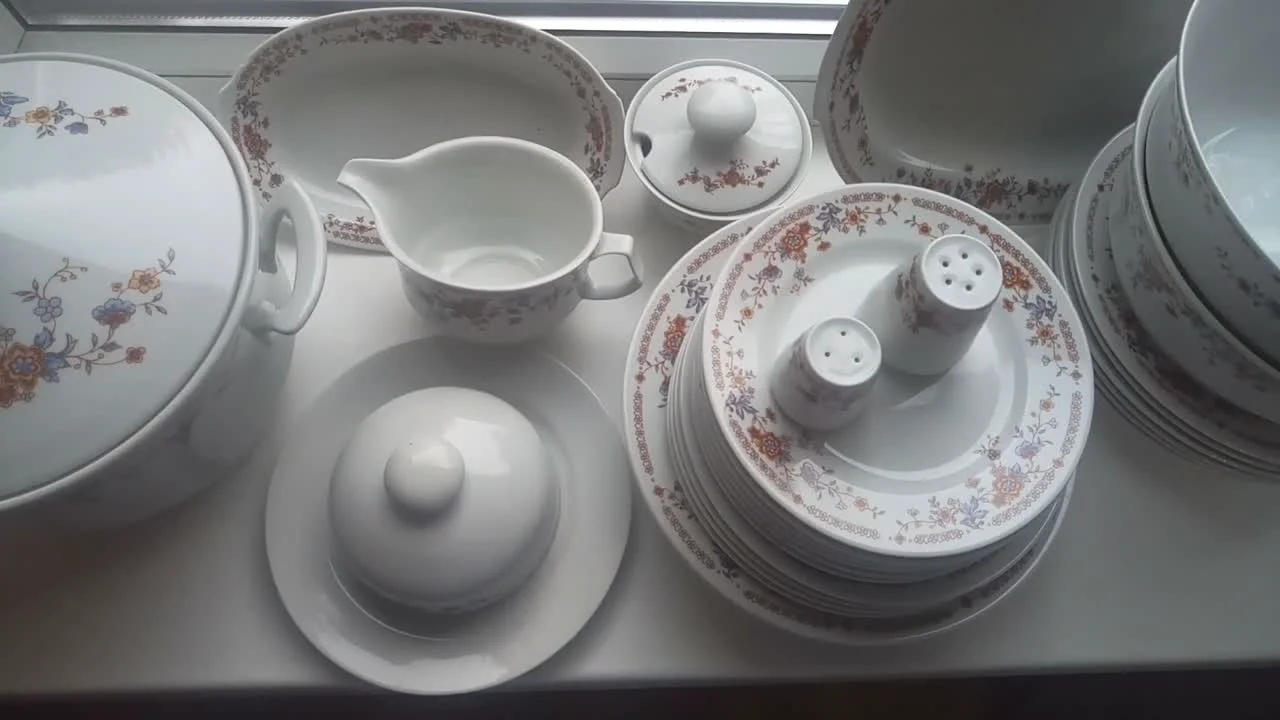
GDR Tableware: German Quality and Prestige
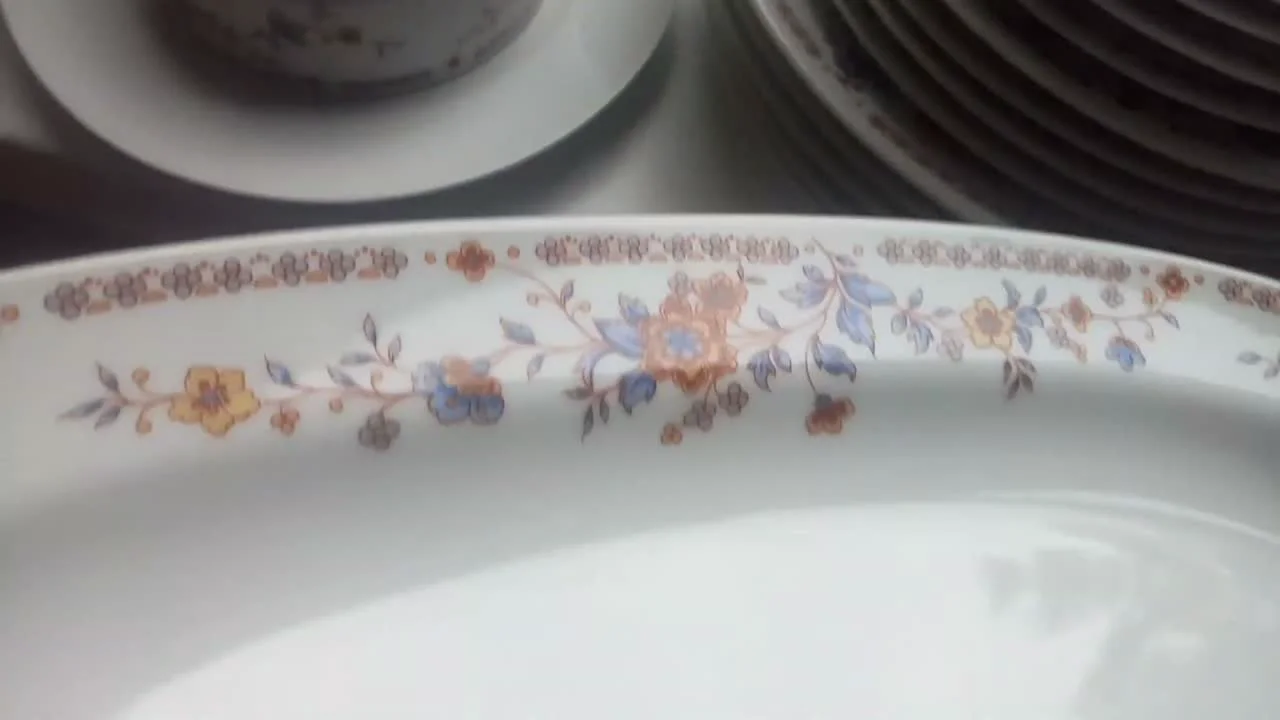
Tableware from the GDR held a special place in Soviet homes. The most famous manufacturer was the 'Ilmenau' factory. German tableware from the 70s-80s was distinguished by its refined classicism: whiteness, graceful shapes, and elegant decor.
The price of porcelain from the GDR was high, and for Soviet people, such sets were considered a true household treasure. They were rarely used, kept in sideboards as a sign of status and wealth. That is why today, in antique shops, one can find many brand-new dinner sets from that era.
Comments (0)
No comments yet. Be the first to share your thoughts!