
The Wonder of Meissen Porcelain: The Story of the Henry Arnhold Collection
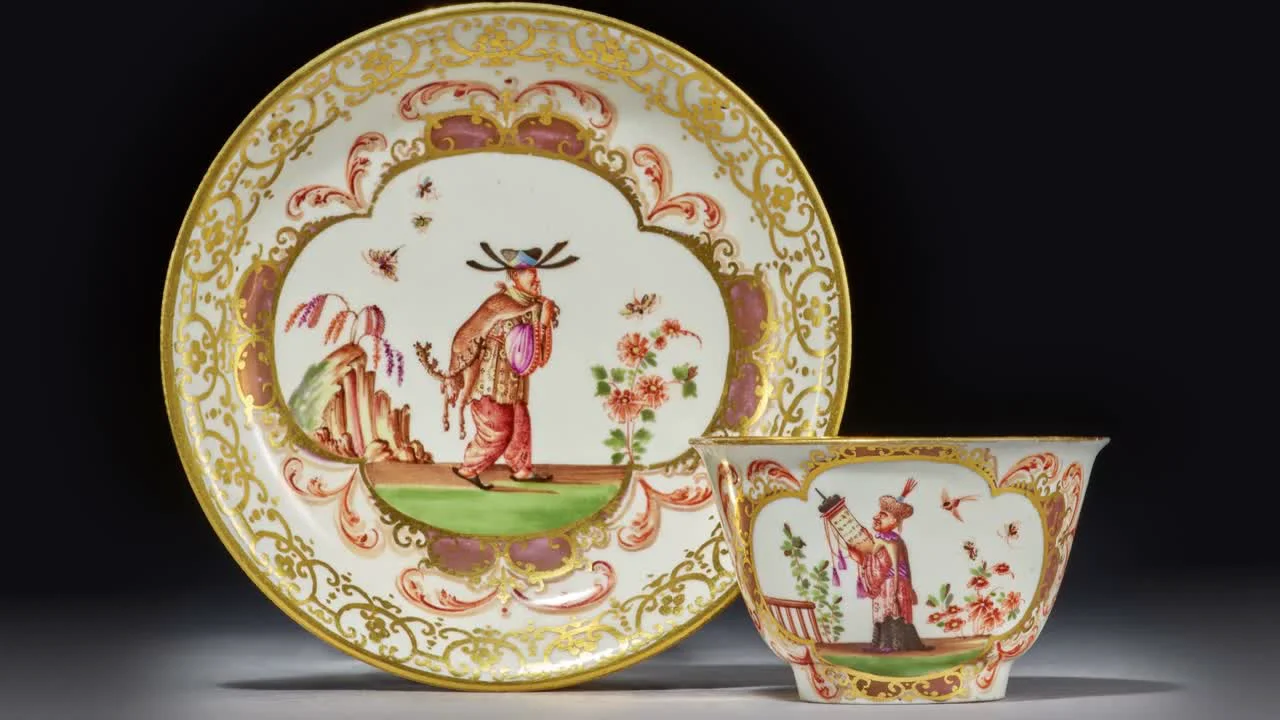
Henry H. Arnhold assembled one of the finest collections of Meissen porcelain in the world. Built upon a family collection spanning generations, this assemblage reflects a lifetime, culture, and the history of a family.
February 1, 2026
Edited by Administrator 2/1/2026
A Collection as a Reflection of Life
Every object in this collection carries a profound meaning, telling a story about what truly matters. These objects became a kind of bridge connecting America and Germany, and the porcelain itself is a symbol of this connection.
The Birth of European Porcelain in Meissen
Meissen porcelain was invented around 1708-1709 in the small town of Meissen, near Dresden. Until that moment, Europeans had been importing Chinese porcelain for centuries, unsuccessfully trying to unlock the secret of its production. It was only in Meissen that the correct formula and technology were found.
Many early pieces were inspired by Chinese and Japanese examples, but European masters reinterpreted them through the lens of their own interests and aesthetics. Thus, Meissen porcelain became the quintessential European culture of the 18th century.
The Arnhold Family: A Collection Through Generations
The Arnhold family came from Dresden, and collecting was their long-standing tradition. It all began with Henry's grandfather, Georg, and then his parents, Heinrich and Lisa, continued to expand the collection, showing particular interest in Meissen porcelain.
As war approached, the family left Germany. Henry's mother, Lisa, moved to the United States, managing to take the porcelain collection with her. This saved the collection, as Dresden was destroyed during World War II, and the items remaining there would most likely have been destroyed.
Henry Arnhold and the Symbolic Significance of Porcelain
Henry himself went through difficult times: he was captured, imprisoned in a camp, but managed to escape and reach the United States. For him, the porcelain collection had enormous symbolic significance, being a connection to his family history and his native Dresden.
As a collector, Henry possessed persistence and an unerring instinct, always seeking items of the highest quality. He showed particular interest in rare early pieces from the Meissen manufactory, known as "Böttger stoneware." His passion for porcelain became the basis for a friendship with the artist and writer Edmund de Waal.
A Lasting Legacy in the Frick Collection
Henry Arnhold's collection attracted the attention of the Frick Collection. The predecessor of the current director, Ann Poulet, convinced Henry to make a promised gift to the museum. He was allowed to choose 134 items from the vast Arnhold collection.
Thanks to this generous gift, the Frick Collection now possesses one of the finest collections of Meissen porcelain in museums in the United States. Henry Arnhold's legacy continues to live on, demonstrating that Meissen porcelain remains one of the greatest forms of art, not losing its relevance today.
Comments (0)
No comments yet. Be the first to share your thoughts!