
A Mistake When Buying Meissen Porcelain: How to Distinguish an Original from an Imitation
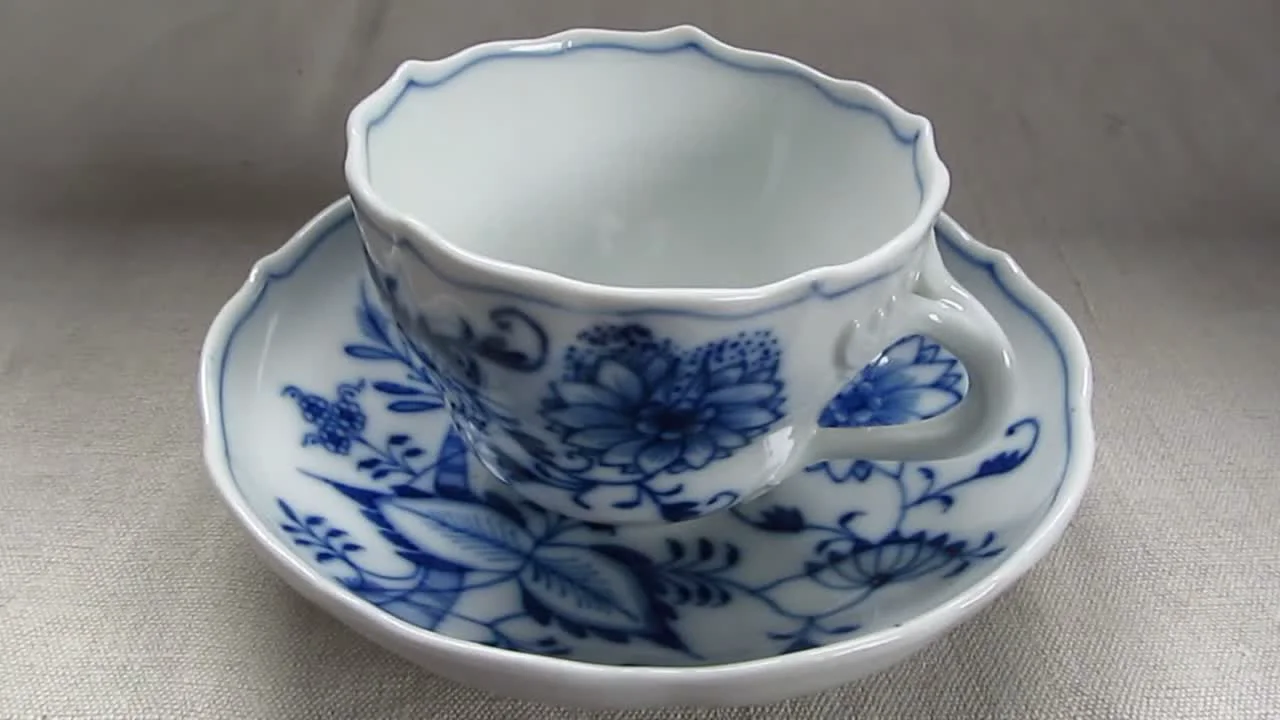
Several years ago, a teacup and saucer set was purchased from the tableware section of a second-hand store. The porcelain piece, with its 'blue onion' pattern and a 'Meissen, Germany' mark, immediately caught my eye, as the Meissen manufactory is known worldwide.
January 31, 2026
An Unexpected Find in a Second-Hand Store
Several years ago, a teacup and saucer set was purchased from the tableware section of a second-hand store. The porcelain piece, with its 'blue onion' pattern and a 'Meissen, Germany' mark, immediately caught my eye, as the Meissen manufactory is known worldwide.
At that time, I had no deep interest in porcelain, but I was aware of the famous manufacturer. The initial find seemed like a great stroke of luck, but a subsequent check of the item at home using the internet led to disappointment.
Disappointment After Inspection: Two Different Meissens
| Manufacturer | Characteristics | Mark |
| World-renowned Meissen manufactory | High quality, historical value | Crossed blue swords |
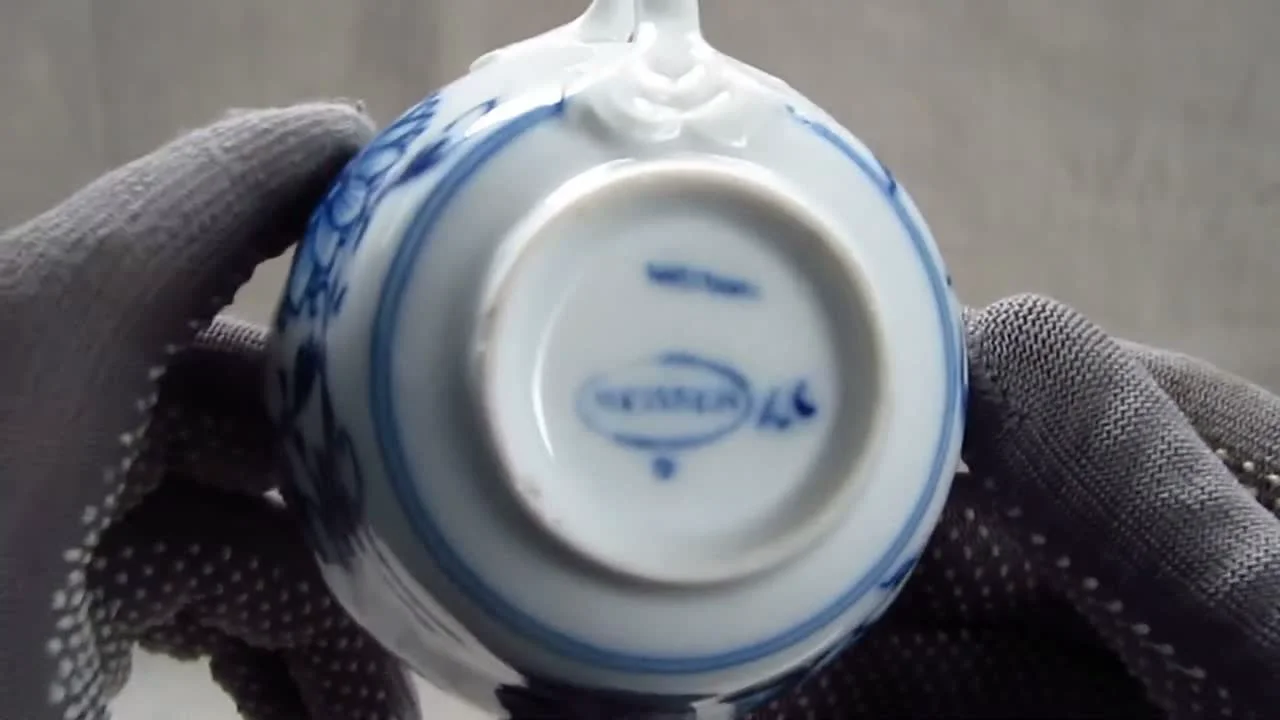
| Small manufactory from the city of Meissen | Mediocre quality, imitation of style | City name 'MEISSEN' in an oval |
After identification, it turned out that the purchased teacup and saucer set was indeed produced by a manufactory named Meissen, but not the world-famous one. It was a product of a different, smaller factory also located in the city of Meissen.
This small manufactory uses the city's name in its mark, which can be misleading. Such items are typically of mediocre quality and have no connection to the famous brand, although they are sometimes sold at the price of original Meissen.
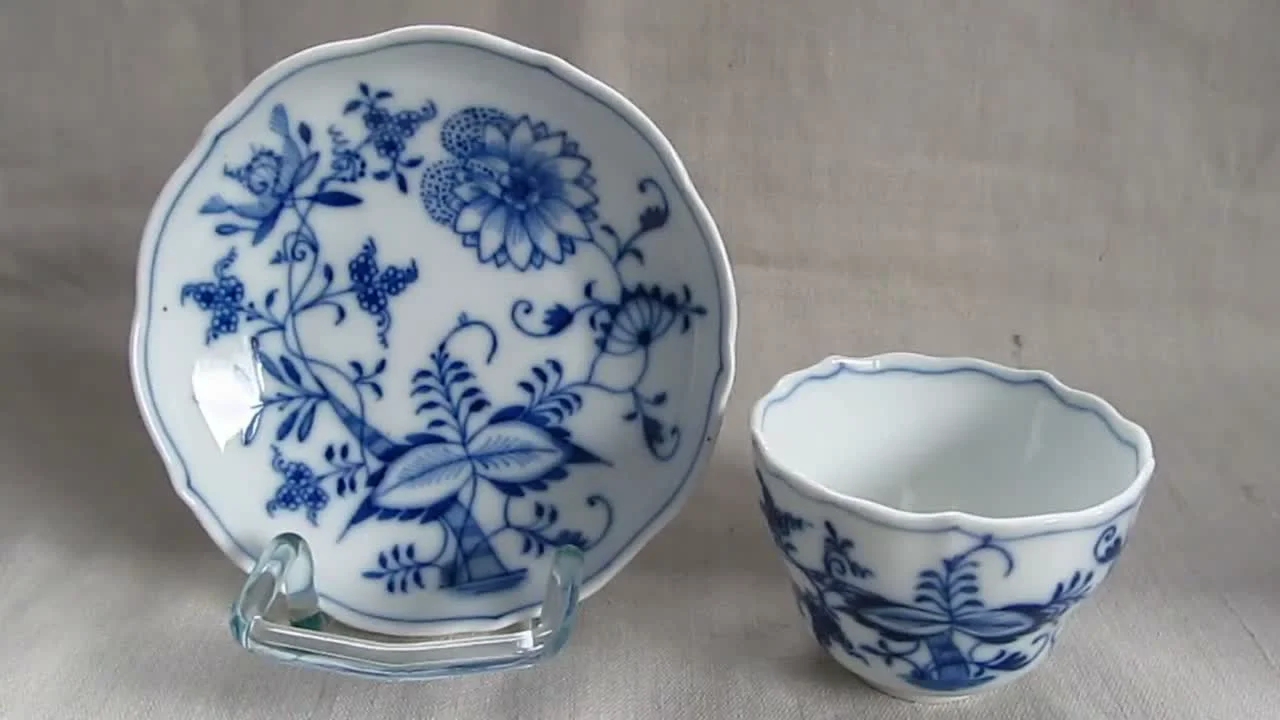
Essentially, this was a purchase of an item in the 'blue onion' style, which the small manufactory sells while operating in the shadow of the famous brand.
The Key to Identification: The Mark and Quality
The main distinguishing feature of original products from the world-renowned Meissen manufactory is the signature mark of crossed blue swords. This symbol confirms the authenticity and high value of the item.
The purchased teacup and saucer set can hardly be called a fake or a copy. Rather, it is an item made 'in the style of,' created for sale to a wide range of buyers. To avoid such mistakes and not be deceived, one must be extremely careful when buying antique porcelain.
It is recommended to follow these rules:
- Pay attention to the marks. They are the primary source of information about the manufacturer.
- Research the information and history of the manufactory whose products you plan to purchase.
- Carefully assess the quality of the porcelain and the painting.
- Consider other nuances that may indicate the item's origin.
Comments (0)
No comments yet. Be the first to share your thoughts!